Skeeper SM-300
by SmartSound
You came from PENDING. His partner discount applies automatically at checkout.
PENDING exclusive · For people who track everything

You track your sleep, your macros and your resting heart rate. You have never once heard your own heart.

The Skeeper SM-300 is a consumer FDA-cleared smart stethoscope. Put it on your chest, press one button, and record about 30 seconds of your actual heart and lung sound in high-fidelity audio. Not a number your wrist inferred from a pulse. The sound itself, saved, timestamped, and yours to hand to a doctor whenever it matters.

$499one-time, app included, ships free

You already pay a strap, a ring or a watch to estimate what your heart is doing from the outside, month after month. This records the source, once, for a one-time price with no plan on top. And to be clear about what it is not: it does not screen you, it does not tell you your heart is healthy, and it will not catch a condition. It is a recorder, and a very good one. Every interpretation belongs to a clinician.

Pay over time with Shop Pay Installments at checkout. HSA/FSA may be eligible, check your plan.
See how it works
FDA-cleared High-fidelity heart & lung audio HSA/FSA may be eligible Pay over time at checkout
Creator demo video slot. Drop the shoot-day footage here.
Why PENDING keeps one in his bag

His own words go here, pulled from the footage. Nothing scripted, nothing we wrote for him.

Heads up: PENDING is a paid SmartSound partner and earns a commission on orders placed through this page. That does not change what you pay, and it does not change what the device does or does not do. Everything below is the same information on the main product page.

One device, three modes

Heart. Lung. Fetal.

One 53-gram disc captures three kinds of sound. Heart and lung are the two you will use. Fetal mode is there because the device ships with it, and it matters to some households.

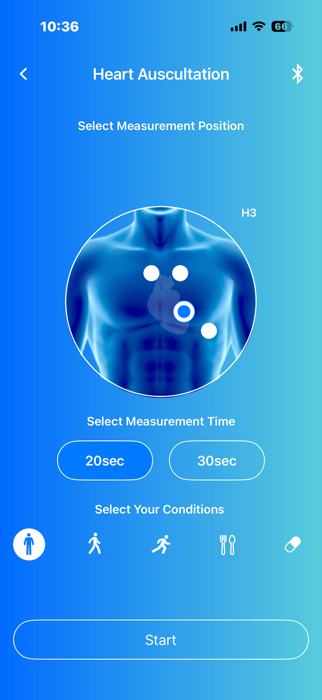
Skeeper app heart mode, guided measurement position on a body map
Heart mode

Record your heartbeat

Place the disc on your chest and record the heart sound in clear, high-fidelity audio. Hear it, save it with a date on it, and share the recording with your doctor.

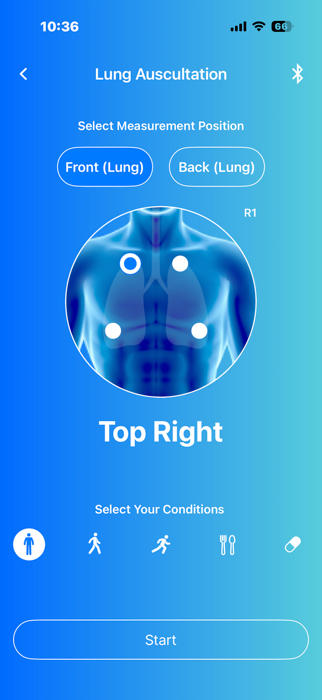
Skeeper app lung mode, guided front and back measurement positions
Lung mode

Record the breathing

Capture the sound of your own breathing when a cough or a tightness has you wondering. Record about 30 seconds and hand your doctor the actual sound instead of describing it.

Listens only. Emits nothing.
Fetal mode

Listen, and only listen

Fetal mode is a passive microphone. It only listens to naturally occurring sound and emits nothing. It is not an ultrasound. Capture the moment, save it, and share it with your OB.

Straight, before you spend anything

What this is not.

You are going to be tempted to read this as a screening tool. It is not one, and we would rather lose the sale than let you buy it thinking it is.

It does not screen you for anything. It will not tell you your heart is healthy, it will not clear you for training, and it will not catch a condition. No consumer device does that, and any brand telling you otherwise is selling you something it cannot deliver.

What it actually does is narrow and useful. It captures the real acoustic signal from your chest at clinical audio quality, saves it with a date on it, and lets you send it to a doctor as a link they press play on. Your watch estimates. This records. The difference matters the day someone qualified needs to hear the thing itself.

And if something feels wrong right now, go see a doctor today. Not after a package arrives. Chest pain, breathlessness that is new, a heart rhythm that scares you: those are appointments, not gadget purchases.

The 30-second baseline

Four steps, one button, about 30 seconds.

Do it once while you feel fine. That recording is the whole point, because a sound only means something next to what you normally sound like.

1

Put it on your chest

The app shows you exactly where to place the disc, front and back. You do not need to know any anatomy to get a clean recording.

2

Press record

About 30 seconds. The app captures the sound and draws the waveform live, so you can see it is picking up cleanly before you stop.

3

Bank the baseline

It saves with a date on it. Do it again after a hard block, after an illness, or once a quarter, and you have a personal library instead of a single isolated recording.

4

Send it when it counts

Share it as a secure link straight from the app. It plays in any browser. No portal, no login, no software on their end. Your doctor presses play.

That is the job, start to finish. You are not diagnosing anything and neither is the device. You are collecting the one signal your tracking stack has never captured, so that the day it matters you are not starting from zero.

Why it is different

Your wearable gives you a number it worked out. Skeeper captures the sound itself.

A watch, a ring or a strap infers what your heart is doing from the outside, then hands you a score. Skeeper is a different instrument entirely: it records the actual acoustic signal from your chest, and that recording is something a clinician can listen to.

Wearable tracker Skeeper SM-300
How you use it Worn continuously, always scoring Episodic, about 30 seconds when you want it
What it captures A number derived from your pulse The actual heart and lung sound
Can a doctor use it A trend chart from an app Share the recording by secure link
Notifications Buzzes, scores, streaks Silent, it only runs when you run it
Who it works on One wrist, one person Anyone in the house, adults included
What it costs over time A device, then a monthly plan for the data One price. App included.
Who makes sense of it You, alone, staring at a number Your own doctor, listening to the real sound

Think of it as a complement, not a replacement. An oxygen monitor measures a number. Skeeper captures the actual sound, the thing that number can never tell you, and lets you share it. They do completely different jobs. And because it is one price with the app included, you are not signing up for a second bill just to keep using it.

One device, everybody under your roof

You are not the only person in the house with a chest.

You will buy this for yourself. It works on everyone else you live with, which is most of why it earns its price.

Your parents

The cough your dad keeps waving off at Sunday dinner, the one he will not book an appointment for. Record it and let him walk the actual sound into his own doctor's office.

Your partner

Same disc, same 30 seconds, same shareable recording. Heart and lung modes work identically on any adult.

Your kids

The cough at four in the morning that has you standing in a hallway wondering. Capture it while it is happening, not at the appointment three days later when it has stopped.

Training partners

It is one device and it takes 30 seconds. Everyone who has ever wondered what their own heart sounds like gets to find out.

Same rule for every one of them: the Skeeper records and shares. It does not interpret, it does not screen, and it does not replace anyone's doctor.

The specs

Serious hardware. Real-parent price.

A 53-gram disc with a passive acoustic sensor, three modes, and an 8-hour battery, in a device built for parents.

Regulatory
FDA-cleared
Consumer FDA-cleared device
Sensor
Passive MEMS mic
Acoustic listening, never ultrasound
Weight
About 53g
Fits in a diaper bag or pocket
Connectivity
Bluetooth LE 5.0
Pairs with the Skeeper Pro app
Battery
8-hour battery
About 2 hours to recharge
Modes
Heart, Lung, Fetal
Three modes in one disc
Guarantee
30-day returns
Money-back if it is not for you
App
One-button recording
Record, hear, share by secure link
FDA-cleared Passive mic, not ultrasound 30-day money-back guarantee HSA/FSA may be eligible
Independent field test

Tested by someone who uses the real thing.

I have used real gear in the back of a helicopter. This is the first consumer device I would actually keep in my own home. It captures the sound cleanly and it is simple enough that anyone can use it.
Flight medic, field testerIndependent field test of the Skeeper SM-300

We are not going to paste stranger testimonials from parents onto a page built for you. The field-test quote above is real. Everything else you should judge from the video, the spec sheet and the clearance number.

Questions, answered

Good questions. Straight answers.

Will this catch a heart problem?
No. This is the question we get most and the answer has to be blunt, because the stakes are yours. The Skeeper records sound and lets you share it. It does not screen, it does not analyze you, and it will not tell you that something is wrong or that everything is fine. A clinician does that, and they do it with far more than a recording. If you have symptoms right now, book an appointment today rather than buying anything.
I already wear a tracker. Why would I want this too?
They do different jobs. Your watch or ring reads your pulse from the outside and turns it into a number, continuously. That is genuinely useful for training load and trend. What it cannot produce is the actual acoustic signal from inside your chest, which is the thing a doctor listens for with a stethoscope. This records that, at high audio quality, in a file you can send. One is a trend. The other is the sound itself.
Do I need to know what I am listening for?
No, and you should not try to be. The app guides placement, so getting a clean recording takes no skill at all. Interpreting it is a trained job and you are not expected to do it. The value is that you now have something to hand over, with a date on it, instead of describing a feeling in a ten-minute appointment.
Is it FDA-approved?
The Skeeper SM-300 is FDA-cleared, not FDA-approved. The two terms mean different things. "Cleared" means the FDA reviewed the device and found it substantially equivalent to a legally marketed device, which is the common pathway for consumer medical devices like this one. "Approved" is a separate, higher-bar pathway used for higher-risk products. Devices in this category, including popular home health devices, are cleared rather than approved.
Does it diagnose anything?
No. Skeeper does not diagnose. It records and captures the sound so you can hear it and share it with your doctor. The interpretation stays with your clinician. Think of it as a way to bring your doctor better information, not a replacement for their judgment.
Is the fetal mode safe? Is it an ultrasound?
Fetal mode is a passive acoustic microphone. It only listens to naturally occurring sound and emits nothing into the body. It is not an ultrasound and does not work like the consumer fetal dopplers you may have read about. It sits in the same acoustic-listening category as a stethoscope.
Is it HSA/FSA eligible?
It may be eligible. Eligibility depends on your specific plan, and some plans may ask for a Letter of Medical Necessity. Check with your plan administrator before you buy so you know how your account treats it.
Will my doctor actually accept a recording?
A clean recording gives your doctor better information than a phone video or a spoken description of a symptom. You share it as a plain audio link that plays in any browser, so there is no portal or software on their end. Every practice is different in how it uses outside recordings, so that part is up to your doctor.
The parent's stethoscope

Record the baseline while you feel fine.

A consumer FDA-cleared smart stethoscope in one 53-gram disc, smaller than a cookie. The recording is only worth something if you took it before you needed it.

$499  ·  one time, no monthly plan  ·  app included
FDA-cleared 30-day money-back guarantee HSA/FSA may be eligible, check your plan Pay over time at checkout