Press one button. Capture about 30 seconds of your baby's real heart and breathing sound, then send it to your pediatrician as a link they just press play on. The Skeeper does not decide anything. It makes sure the person who does decide is hearing what you heard, instead of you trying to describe a cough over the phone in the dark.
One "just to be safe" ER visit runs $500 to $1,500, and a lot of them end with a shrug and a discharge paper. The SM-300 costs less than one of those nights, and it makes every scary night after it an informed one. It will never tell you to skip the doctor, and it will never tell you it is safe to stay home. It makes sure that when you call, you have the sound in hand.
Pay over time with Shop Pay Installments at checkout. HSA/FSA may be eligible, check your plan.
His own words go here, pulled from the footage. Nothing scripted, nothing we wrote for him.
Heads up: @parents_on_tiktok is a paid SmartSound partner and earns a commission on orders placed through this page. That does not change what you pay, and it does not change what the device does or does not do. Everything below is the same information on the main product page.
One 53-gram disc captures three kinds of sound, so you can hear it, save it, and share it with the person who can help.

Place the disc on the chest and record the heart sound in clear, high-fidelity audio. Hear it clearly, save it to the app, and share the recording with your doctor.

Capture the sound of your child's breathing when a cough or wheeze has you wondering. Record about 30 seconds and share the actual sound with your pediatrician instead of describing it.
Fetal mode is a passive microphone. It only listens to naturally occurring sound and emits nothing. It is not an ultrasound. Capture the moment, save it, and share it with your OB.
If your OB told you not to buy a consumer fetal doppler, they were giving you good advice, and this is not one. So here is the difference, stated plainly, because this is the part people get wrong.
Fetal mode is a passive microphone. It emits nothing. No ultrasound, no energy of any kind into your body. It only listens to sound that is already there, the same way a stethoscope on your OB's neck does.
What it is not: it is not a monitor, it is not a substitute for a single prenatal appointment, and it is not there to tell you your baby is fine. No home device can tell you that, and you should walk away from any that says it can. It is there so you are allowed to listen, and so that when something is worth mentioning, you can hand your OB the recording instead of a description.
This is the whole thing. Learn it once now, so you are not learning it at 2 a.m. with a screaming baby and a phone in your hand.
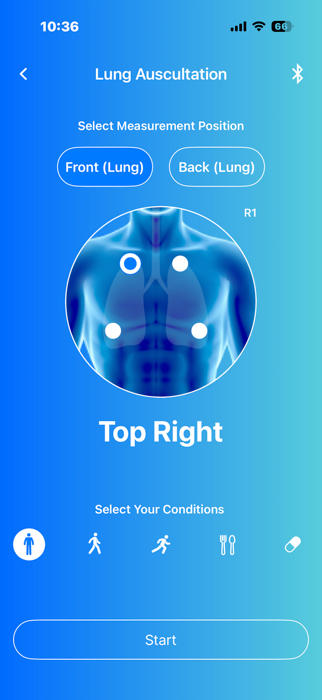
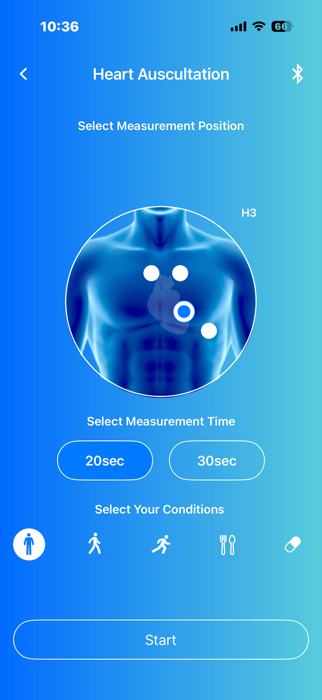
The app shows you exactly where to place the disc, front and back. You do not need to know anything about anatomy to get a clean recording.
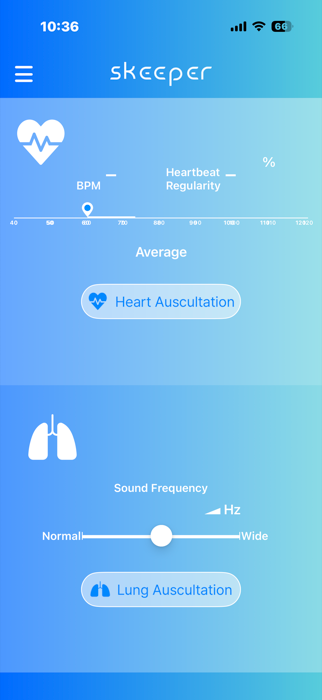
About 30 seconds. The Skeeper Pro app captures the sound and shows the waveform live, so you can see it is picking something up.
Play it in clear, high-fidelity audio as many times as you want. You are hearing what a stethoscope hears, not what a phone mic across the room hears.
Share it as a secure link straight from the app. It plays in any web browser. No portal, no login, no software on their end. They press play and hear exactly what you heard.
That is the job, start to finish. You are not diagnosing anything and neither is the device. You are removing the part where the most important information in the room is a sound that nobody but you ever heard.
Most home baby devices watch a single vital sign around the clock and alarm through the night. Skeeper is different: you use it in the moment, then share what you captured.
| Typical baby monitor | Skeeper SM-300 | |
|---|---|---|
| How you use it | Runs continuously all night | Episodic, use it in the moment |
| What it captures | A single number or a video feed | The actual heart, lung and breathing sound |
| Doctor-shareable | Trends, not the sound | Share the recording by secure link |
| Alarms at night | Beeps and alerts | Non-alarm, it does not beep all night |
| Works across life stages | Infants only | Heart, lung and fetal modes |
| What it costs over time | A device, plus a required app plan, often | One price. App included. |
| Who makes sense of it | You, alone, staring at a number | Your own pediatrician, listening to the real sound |
Think of it as a complement, not a replacement. An oxygen monitor measures a number. Skeeper captures the actual sound, the thing that number can never tell you, and lets you share it. They do completely different jobs. And because it is one price with the app included, you are not signing up for a second bill just to keep using it.
You will buy this for one small person. It works on every other person in the house too, which is most of why it earns its price.
Heart and lung modes work on adults exactly the same way. Same disc, same 30 seconds, same shareable recording.
The croupy one at four in the morning, the one whose cough has been hanging around for two weeks. Capture it while it is happening, not at the appointment three days later when it has stopped.
The cough your dad keeps waving off at Sunday dinner. Record it, and let him take the actual sound to his own doctor.
Yours is the chest you have never once listened to. It takes 30 seconds and the recording is yours to keep.
Same rule for all of them: the Skeeper records and shares. It does not interpret, and it does not replace anyone's doctor.
A 53-gram disc with a passive acoustic sensor, three modes, and an 8-hour battery, in a device built for parents.
I have used real gear in the back of a helicopter. This is the first consumer device I would actually keep in my own home. It captures the sound cleanly and it is simple enough that anyone can use it.Flight medic, field testerIndependent field test of the Skeeper SM-300
My toddler had a cough that sounded different one night. I recorded about 30 seconds and sent it to our pediatrician in the morning. Having the actual sound to share made the whole conversation easier.
I already have a baby monitor for oxygen, but this is the piece I was missing. Being able to hear and save the breathing sound, then share it, gave me something concrete to bring to the appointment.
As a second-time mom I wanted to hear my baby between OB visits without a fetal doppler. Knowing this is a passive microphone and not an ultrasound is exactly why I chose it. Simple and reassuring.
A consumer FDA-cleared 3-in-1 smart stethoscope. Heart, lung and fetal modes in one 53-gram disc, smaller than a cookie. Nobody has ever ordered one of these at 2 a.m. and had it arrive in time.